
Last month I blogged that the Centre for Social Informatics had been successful in winning a grant from the AHRC to be led by my colleague Dr Alistair Duff, and that soon we would be advertising two positions associated with this new project to start in May 2013 or soon after. The details of the first of these – a three year fully-funded PhD studentship in census informatics, ethics and policy – are now available.
Open Knowledge Foundation meet-up, Edinburgh 24th January 2013
Last Thursday I attended an evening meet-up of the Open Knowledge Foundation Network (OKFN) Edinburgh, along with Peter Cruickshank (one of my colleagues from the Centre for Social Informatics).
ESRC-funded PhD studentships in Information Science
As a member of the Information Science Pathway of ESRC Scottish Graduate School of Social Science Doctoral Training Centre (SGS-DTC) Edinburgh Napier University is currently inviting applications for funded PhD studentships offered through the DTC’s open competition.
The use of Actor-Network Theory and a Practice-Based approach to understand online community participation
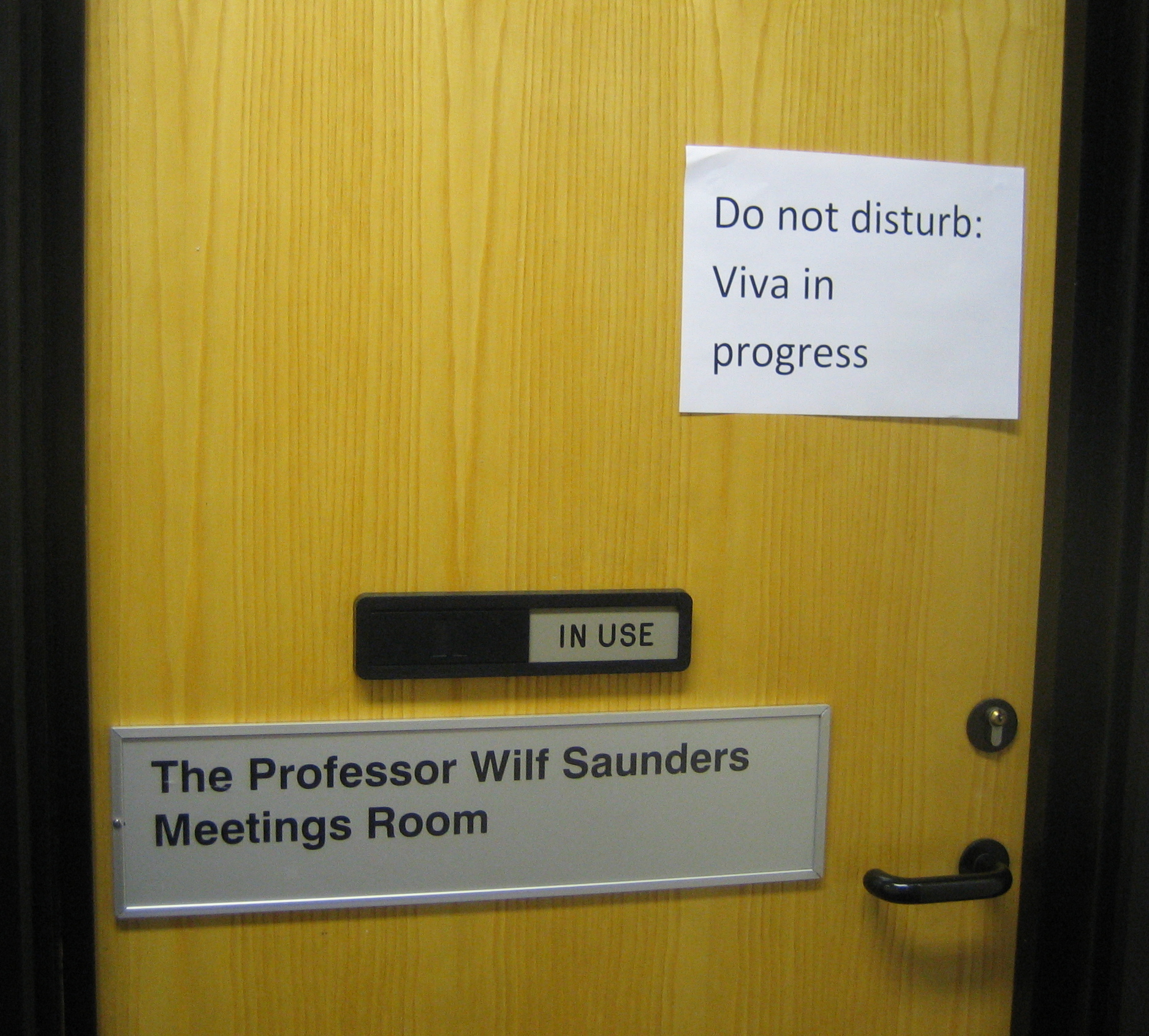
My last work duty of 2012 has been to travel to the iSchool at the University of Sheffield to examine a PhD entitled The use of Actor-Network Theory and a Practice-Based Approach to understand online community participation. The viva went well and I’m pleased that the student will be awarded his PhD subject to minor corrections to the thesis. I was particularly interested in this work because it has parallels with my own doctoral study. In my work I analysed actor-networks that had developed around a knowledge management implementation within a large, distributed organisation to reveal the role of a corporate intranet in knowledge and information sharing.
New AHRC grant for the Centre for Social Informatics
The Arts and Humanities Research Council has awarded a grant of £200,000 to the Centre for Social Informatics for a project entitled Informing the Good Society (InGSoc) to be led by my colleague Dr Alistair Duff. Over three years Alistair and the team will address three main areas: (1) population-census informatics and ethics; (2) the future of columns and electronic “punditry”; and (3) the socio-philosophical foundations of information policy. The project aims to make contributions to our understanding of the social importance of information, and to assist in the development of sound policies.
Latest outputs from CSI projects completed in summer 2012
Summer 2012 was a very busy time as I brought three projects hosted within the my research centre to a close: (1) the implementation of the Library and Information Science Research Coalition in July; (2) RiLIES2, also in July; and (3) the Developing Research Excellence and Methods project in August.
EPSRC Digital Personhood sandpit week
Last week I served as a mentor for the Engineering and Physical Science Research Council in Cheshire at a one-week sandpit event (a form of interactive workshop, and one that appears to have been misunderstood by Private Eye, as can be seen below). My fellow mentors were Professor Richard Harper of Microsoft Research in Cambridge, Professor Bruce Brown of the University of Brighton, and Professor Pete Edwards of the University of Aberdeen. Pete also served as the sandpit director. The aim of the sandpit was to stimulate thinking in promising new areas of the digital economy (DE) research theme.
CSI project research highlights the low online visibility of Scottish Community Councils
This week the Centre for Social Informatics published the findings of a research project that highlights the low online visibility of Scottish Community Councils.
ASIST2012 – and Hurricane Sandy
ASIST2012 was a conference experience like none other. I’d been so busy with my work that before I set off from Edinburgh for Baltimore last Saturday I hadn’t paid heed to the news reports of a hurricane about to hit the east coast of America. In fact, the first I heard of it was when I bumped into fellow UK academic Dr Christine Urquhart at the reception of the conference hotel. Thereafter we heard tale after tale of delegates who had abandoned their plans to come to the conference for fear of becoming stranded, and of others who had arrived, stayed a short while, then turned around again to head home before the hurricane hit. I had no option but to ride out the storm with the few delegates who actually made it to Baltimore and stuck it out.
Congratulations Dr Jan Auernhammer

Dr Jan Auernhammer
I co-supervised Jan’s doctoral work which comprised a case study of the autopoietic organisation of knowledge creativity and innovation within a German manufacturing company.