Alice Thornton at the Festival of Cultural Heritage Research 2024

Alice Thornton's Books logoLast Thursday 18th April, I attended a session at the University of Edinburgh’s Festival of Cultural Heritage Research 2024 entitled Discovery and digitisation: Alice Thornton’s life and books (1626-1707). Continue reading

Creative informatics: unleashing the power of data – exhibition review

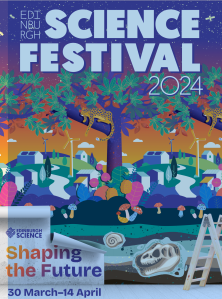
Edinburgh Science Festival 2024 brochure coverOn Thursday 4th April, I attended a private reception to celebrate the exhibition Creative Informatics: unleashing the power of data. The exhibition was hosted at the National Museum of Scotland as part of the Edinburgh Science Festival 2024 to mark the end of the funded phase of the Creative Informatics (CI) programme. Since its inception in 2018, Edinburgh Napier University has been one of the four partners of the CI programme alongside the University of Edinburgh, Creative Edinburgh and Codebase.

Over the past five years, the programme has supported individuals and organisations in the creative industries in Edinburgh and south east Continue reading

Work over winter 2023/24

Marina Milosheva draft PhD thesis

Marina Milosheva’s draft PhD thesis

I have been a little quiet on this blog over the past five months or so. The main reason for this is that I have taken on a further role in addition to that of Emeritus Professor. I am now Continue reading

Centre for Social Informatics ‘all centre’ meeting June 2022

Social Informatics Research Group Edinburgh Napier University selfie

Dr Peter Cruickshank, Dr David Brazier, Dr David Haynes, Dr Hazel Hall, Katherine Stephen, Dr Bruce Ryan, and Dr JP Vargheese pose for a post-meeting selfie

For the first time since 18th December 2019, this week members of my research group gathered for an end of year ‘all centre’ meeting to celebrate our recent research highlights.

Although not everyone could make it on this occasion, those who could enjoyed spending the afternoon of Wednesday 22nd June together. We took it in turns to deliver short personal updates to the rest of the group on our own research. We also read out details sent to us by email from those who could not participate in person, and gave each absent colleague a round of applause. Continue reading

Dr Gemma Webster appointed to EPSRC Peer Review College

Congratulations to Centre for Social Informatics member Dr Gemma Webster on her promotion from associate to full member of the Engineering and Physical Sciences Research Council (EPSRC) Peer Review College.

In this role, Gemma will be taking part in the assessment process of grant applications received by the EPSRC. Her expert knowledge will feed into the investment decisions made by EPSRC review panels, and help ensure that the EPSRC funding is directed to support only the highest quality UK research in engineering and physical sciences.

Appointments to Research Excellence Framework (REF) 2021 panels #REF2021

REF2021 logoOn Friday 23rd March the UK higher education funding bodies announced the appointment of members to the panels for the first stage of the REF 2021 exercise. The panel members were selected from over 4,000 nominations submitted last year by subject associations and other organisations with an interest in research. The panels comprise leading researchers, and individuals with expertise in the wider use and benefits of research.

I am delighted to have been appointed to serve as one of the members of Sub-panel 34: Communication, Cultural and Media Studies, Library and Information Management Continue reading

A copy-writing role with Information Research for Lyndsey Jenkins

Information Research logoCongratulations to Centre for Social Informatics PhD student Lyndsey Jenkins, newly appointed to the team of copy-editors (or ‘editorial associates’) for Information Research. Continue reading

Appointment to the programme committee of the 2nd International Data and Information Management Conference

Loughborough University balloonJust as we are about to enter the summer 2015 conference season, we are already looking forward to 2016!

I have recently accepted an invitation to serve on the international programme committee of the 2nd International Data and Information Management Conference. Hosted by the Centre for Information Management at Loughborough University, the conference takes place on the Loughborough campus next year on 12th and 13th January 2016. An outline programme is now available.

For those interested in presenting a paper at this event, submissions for 500 word abstracts open on July 1st, with a deadline of 30th September 2015. Those whose abstracts are accepted will be expected to submit their full papers by 18th December 2015.

Doctoral degree programme evaluation at the University of Borås

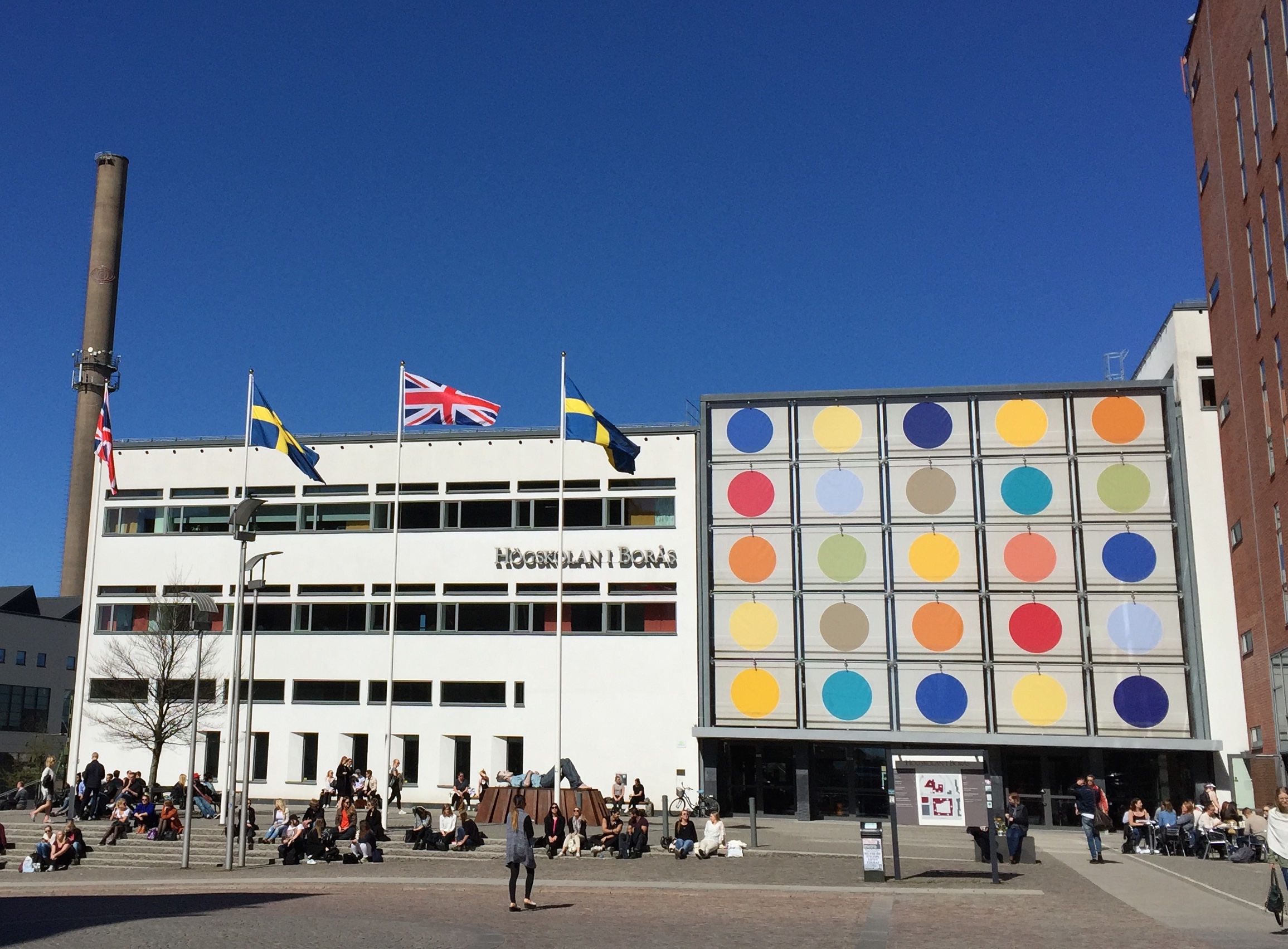
Union flags fly to mark the visit of British professors to the University of Borås

Union flags fly to mark the visit of British Professors Hazel Hall and David Allen to the University of Borås

Last June I blogged about a trip to University of Borås in Sweden to serve as the opponent at a doctoral defence. This week I made a return visit to the University. On this occasion I was an external member of a panel charged with auditing the University’s doctoral education programme in Library and Information Science.

Continue reading

The Circle by Dave Eggers: book review

Over Easter I read The Circle by Dave Eggers. I wouldn’t normally blog about my recreational reading, but there is such a strong overlap between the themes of the novel and my research and teaching interests that I have decided to post my review here.
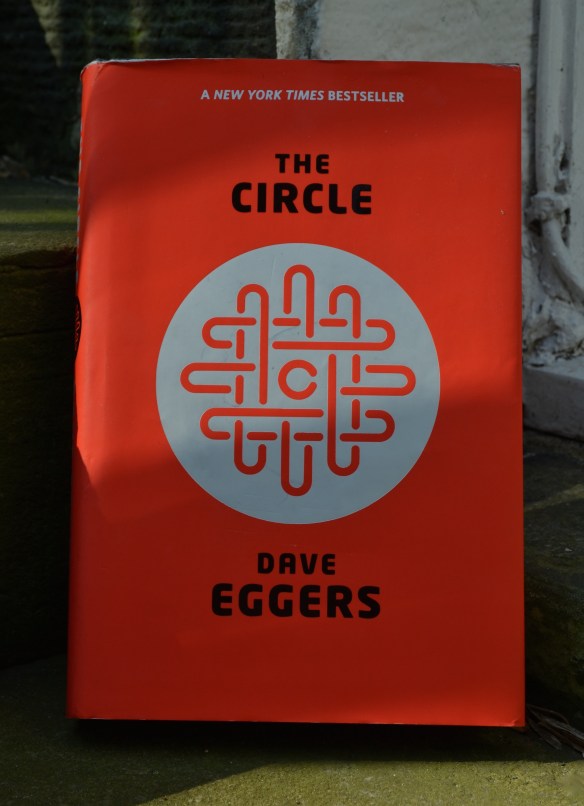
The Circle by Dave Eggers

The Circle by Dave Eggers

The tale’s main setting is the Silicon Valley campus of a tech company in the not too distant future. The Circle has already gobbled up several other familiar enterprises and, as such, may be conceived as a fictional amalgamation of companies such as Google, Facebook, Amazon, and Twitter. Its earnest workforce is involved in numerous innovative projects to make the world a “better” place where communities are safe, and a genuine democracy works for the good of all. Circle technologists work on a bewilderingly wide range of innovations that include, for example, systems to eradicate criminal dangers such as child abduction and to guard against political corruption.

Continue reading