This is a call to fellow library and information professionals to contribute to a research project on the use of Google+. If you work in the library, information and knowledge sector, please read on to learn more about the project and how you can contribute to it.
Category Archives: Projects
Digital Personhood network: review of first meeting, 6-7 March 2014
In 2012 I was a member of the 12-person panel that reviewed the £130 million investment in Research Councils UK’s Digital Economy (DE) programme. The main remit of the panel was to consider the full range of DE projects funded to date. These ranged from doctoral studies based across UK universities, to the large collections of projects hosted at the three DE hubs: (1) Horizon at the University of Nottingham; (2) dot.rural at the University of Aberdeen; and (3) the social inclusion through the digital economy (SiDE) projects at the Universities of Newcastle and Dundee. The review panel’s findings are available in its report hosted on the EPSRC web site.
Research into the practices of Blipfoto members
My colleague Dr Eve Forrest and I are currently undertaking a small study into the practices of the members of the online photography community Blipfoto. Last Thursday we met colleagues at Blipfoto’s Edinburgh office to confirm details for two focus group meetings of Blipfoto members (“blippers”). These will take place in Edinburgh next week on Thursday 6th February, with one in the afternoon, and the other in the early evening. (It is anticipated that some members may like to continue the conversation afterwards, so these meetings may well transform afterwards into mini-blipmeets.)
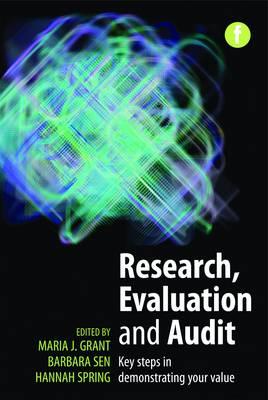
Addressing the research-practice gap: Facet publishes Research, evaluation and audit
An on-going concern of many professions, such as policing, social work, psychology, nursing, and teaching, is the “research-practice gap”, and the corresponding distance between researchers and practitioners within each community. Much of my work with the Library and Information Science (LIS) Research Coalition, and its associated projects Developing Research Excellence and Methods (DREaM) and the Research in Librarianship Impact Evaluation Study (RiLIES), sought to address the gap within LIS between 2009 and 2012.
Social Network Analysis (SNA) and LIS research: newly-published article in the Journal of Documentation
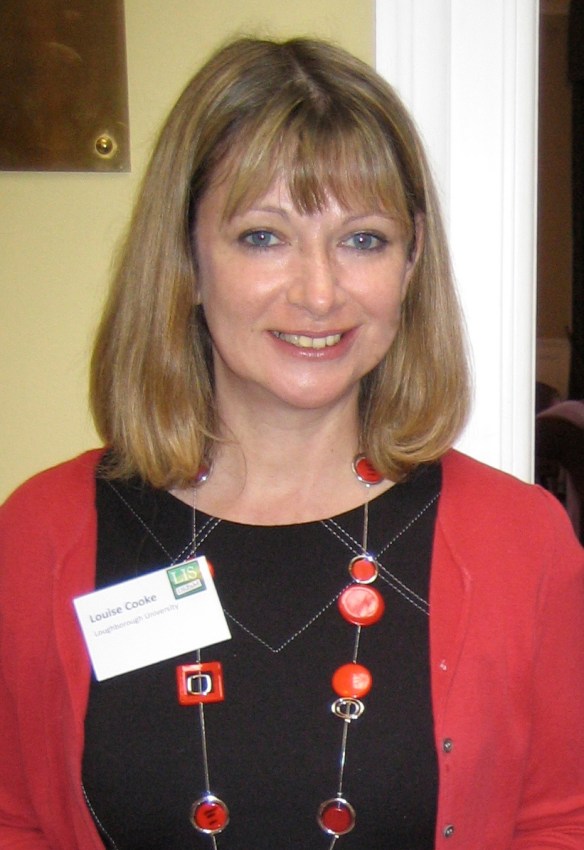
Last year Dr Louise Cooke of Loughborough University and I worked on a research project that explored the applicability of Social Network Analysis (SNA) to Library and Information Science research. The novelty of this work was in its assessment of the value of SNA in the context of the development of researcher networks. The findings from our empirical work, which we wrote up for publication as a research paper, indicate the potential of a methodology that could be used as a replicable framework for further development of networks in other contexts.
The manuscript of our paper was accepted for publication in the Journal of Documentation (JDoc) in December 2012. JDoc is one of the top international information science journals and regularly achieves the highest citation ratings in ISI for comparable titles.
The academic year and the academic’s year (or “how I spent my summer vacation”)
An unwelcome question
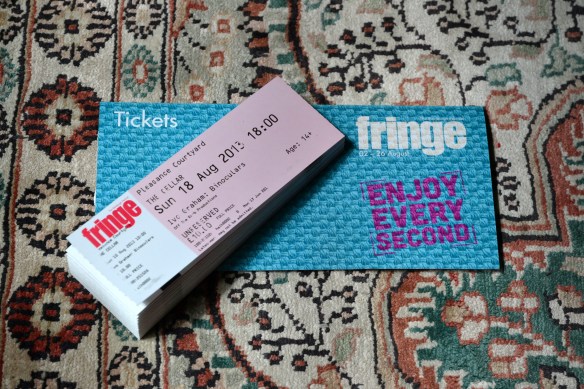
At a party recently another guest kindly asked me how I felt about “returning to work in the autumn” after my “long summer vacation”. I held my breath for a few seconds, then carefully replied that my annual leave entitlement is 27 days plus 14 fixed/public holidays. (This may be fewer than his – I didn’t ask). To get the conversation back on track, I then enthused about my fabulous two-week holiday in the far north west of Scotland in August, and the events that I managed to catch during the Edinburgh Festival and the Fringe. In response he told me about his own summer break. We were both able to enjoy this pleasant, yet insignificant, conversation ending on a happy discussion of the best British summer weather in years.
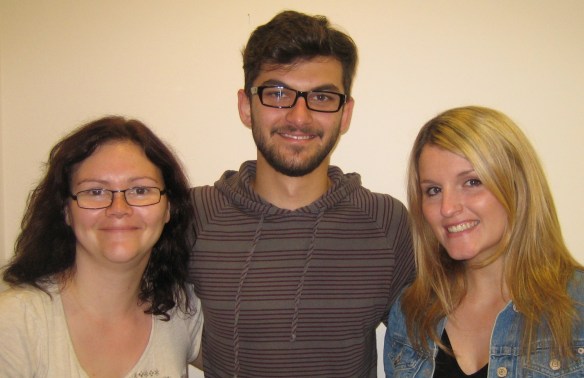
New IAESTE summer intern Dushko Stanoeski joins the Connect team

Dushko with his summer 2013 colleagues Tracey Binnie (L) and Cheryl Cairns (R)
Dushko Stanoeski joined us this week at Edinburgh Napier University to help complete a summer project.
Dushko is a final year student at the Faculty of Electrical Engineering and Information Technologies at Ss. Cyril and Methodius University in Skopje, Macedonia where he specialises in Informatics and Computer Engineering.
Congratulations Dr Robert Irvine

Dr Robert Irvine
Many congratulations to Dr Robert Irvine, who graduated with his PhD from Edinburgh Napier University on Wednesday at the Usher Hall in Edinburgh.
I co-supervised Robert’s doctoral study entitled Success factors for organisational information systems development projects: a Scottish suppliers’ perspective.
The starting point for Robert’s work was the acknowledgement that organisational information systems development (OISD) projects have long been associated with failure, and the cost of these failures is enormous. Yet, despite numerous previous studies, understanding of real-world projects is limited. In particular, Robert identified that little was known about the way in which various factors affect the success of OISD projects. In addition, Robert’s work concluded that earlier research has generally tended to focus on OISD projects from an in-house or client perspective, with the views of the supplier largely ignored.
Social media in the heritage sector: Edinburgh Napier prize-winning student project

Patrick Notz
At the exam boards this week it was announced that one of the projects that I supervised in 2012/13 has won the Institute of Informatics and Digital Innovation award for knowledge exchange.
The winning work examined the application of social media in the heritage sector, drawing on a case study of social media practice at the National Museum of Scotland. It was completed by final year undergraduate student Patrick Notz.
Sharing the DREaM blueprint: lessons in community network building from the DREaM project
This afternoon I gave an invited presentation to staff at the Royal Commission on the Ancient and Historical Monuments of Scotland (RCAHMS). The RCAHMS is Scotland’s national collection of buildings, archaeology and industry. I’d been invited to contribute to the Commission’s research seminar series not for my knowledge of history, but to share my experience of using social media to support community development. My specific remit was to distil key lessons from the AHRC-funded Developing Research Excellence and Methods (DREaM) project completed in 2012, the main aim of which was to develop a formal UK-wide network of Library and Information Science (LIS) researchers. My full presentation is available on SlideShare.