The inauguration of Gunilla Widén as Rector of Åbo Akademi University, Finland

Gunilla, Widén, Rector, inauguration, Åbo Akademi, procession

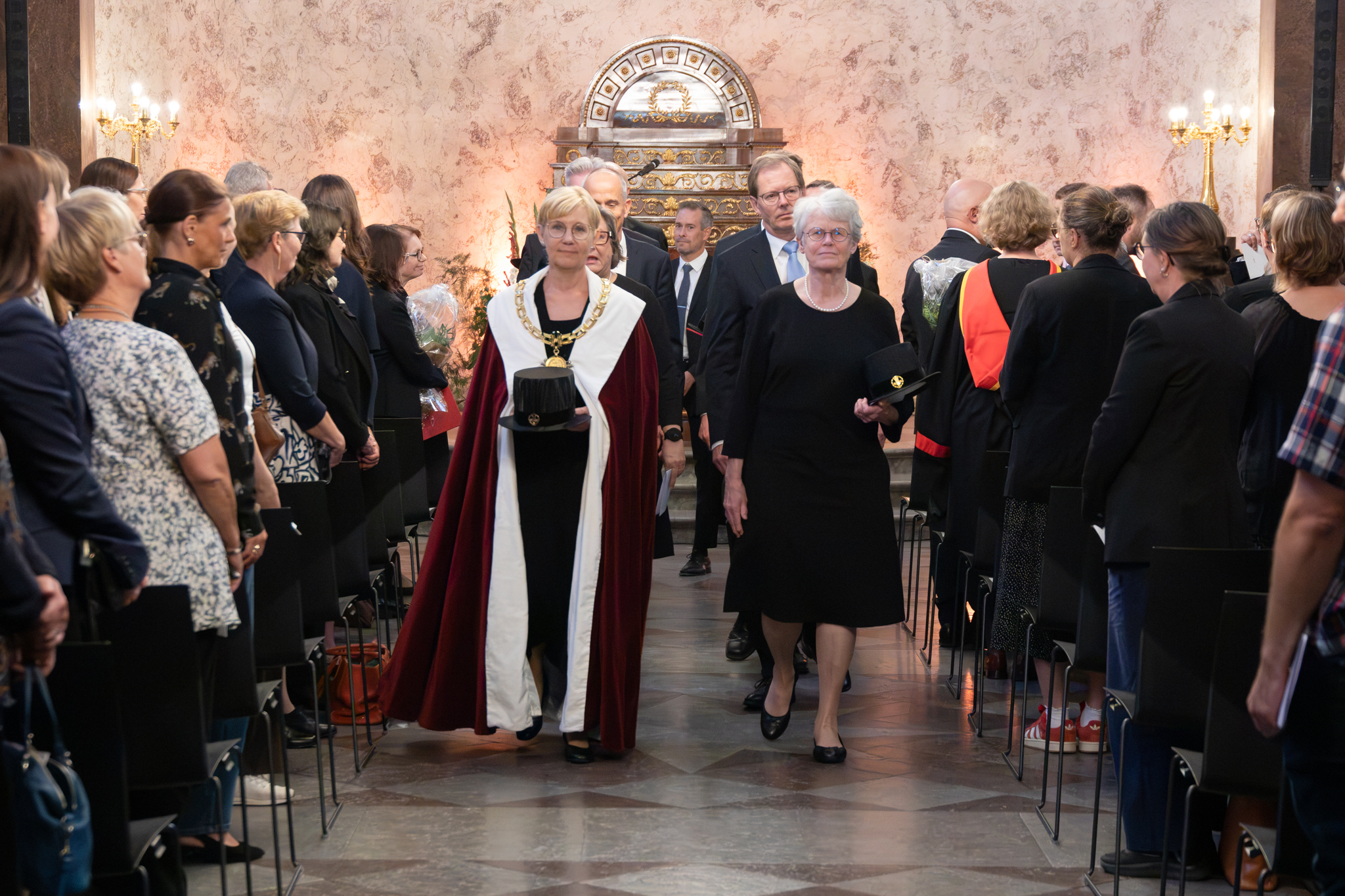
Academic procession at Åbo Akademi Rector Gunilla Widén’s inauguration ceremony: photo credit Åbo Akademi University/Pamela Friström

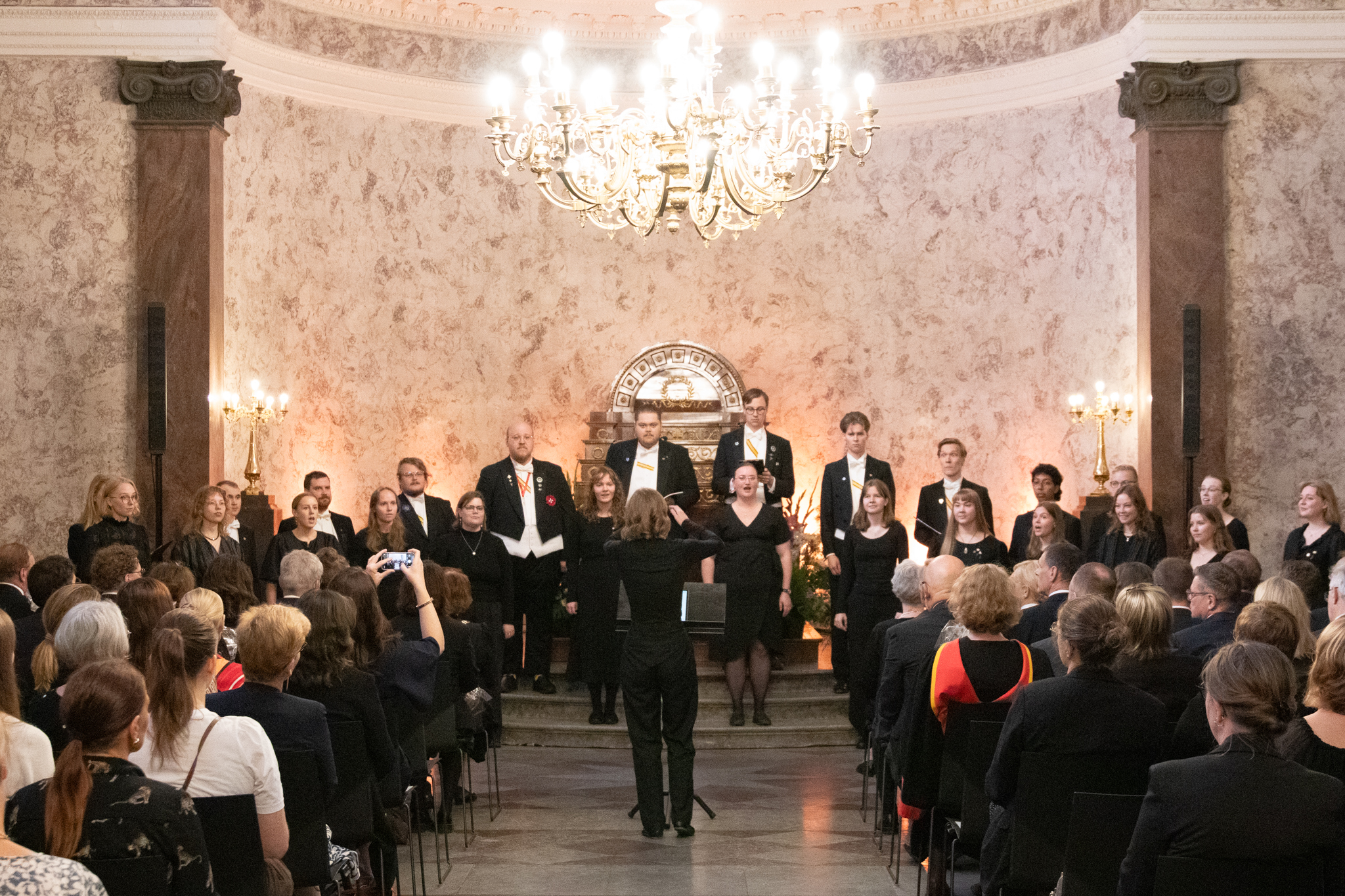
On 3rd September 2026, I was delighted to attend the ceremony at which Professor Gunilla Widén was formally inaugurated as Rector (Vice Chancellor) of Åbo Akademi University in Turku, Finland. Even though most of the proceedings were conducted in Swedish, I was still able to follow the main components of the event. I particularly enjoyed the music and the singing of the choir.
Gunilla, Widén, Rector, inauguration, Åbo Akademi, choir

The choir at Åbo Akademi Rector Gunilla Widén’s inauguration ceremony: photo credit Åbo Akademi University/Pamela Friström

Further celebrations followed the formal part of the day. First there was an afternoon reception in the University’s beautiful Akademihuset for everyone who had been at the ceremony. Then, in the evening, there was a dinner for around 50 of Gunilla’s closest colleagues and family members.
Gunilla, Widén, Rector, inauguration, Åbo Akademi, Hazel Hall

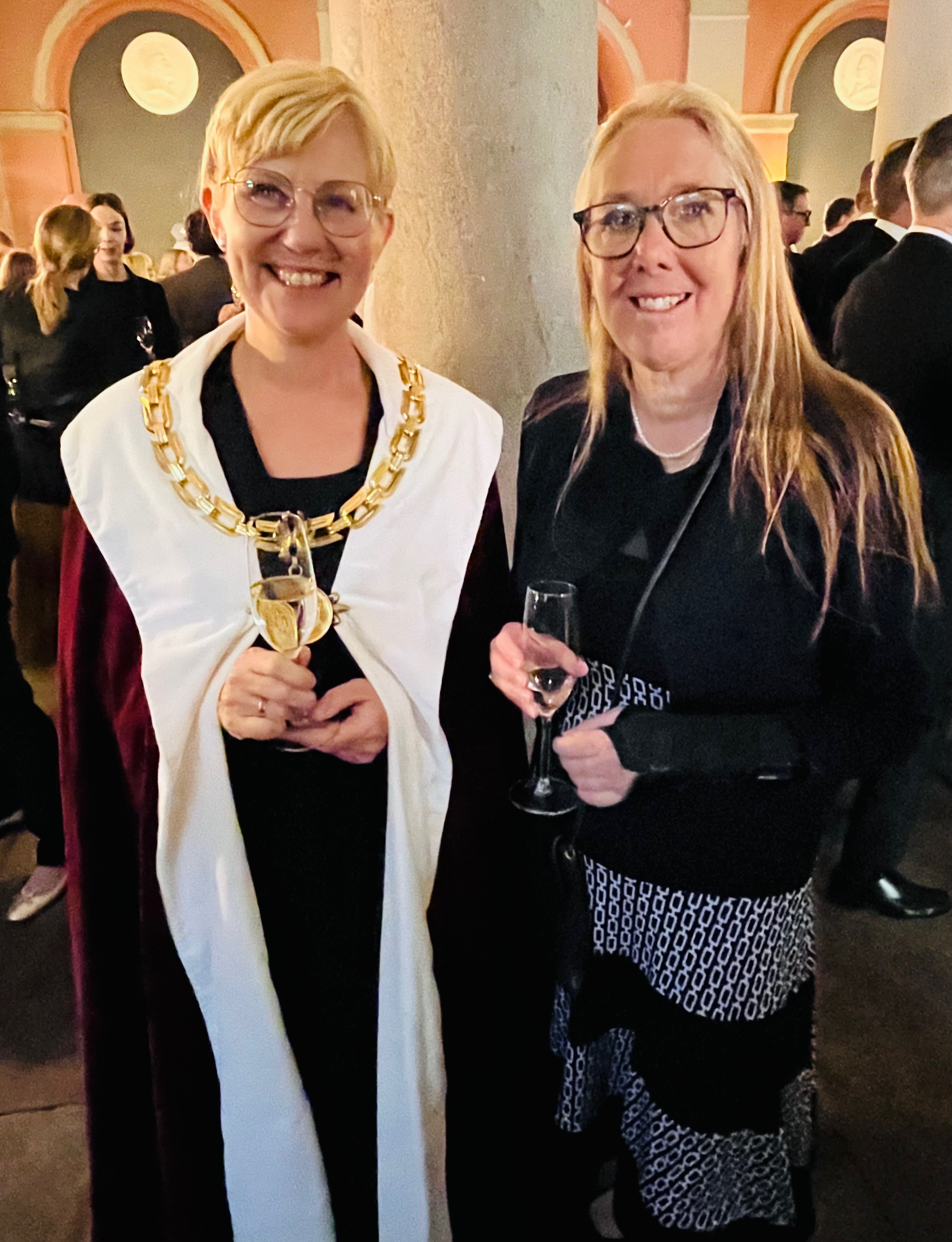
Professors Hazel Hall and Gunilla Widén following the ceremony (with Hazel wearing a splint to support the wrist that she broke on 18th July 2026)

My main contribution to the day was a short speech, which I delivered during the dinner. During this, I recalled that Gunilla and I first met as PhD students at the third Information Seeking in Context (ISIC) conference in Gothenburg, Sweden in August 2000. At the time we were both conducting research into information behaviour and use in large corporate organisations: Gunilla in the insurance industry, and I in professional services firms. We recognised then that there were many overlaps in our academic interests. Reflecting on this a quarter of a century later, it seems that it was almost inevitable that we would be keen to work together in the future. Our collaborations have been many and varied. For instance, we have:

It is also perhaps unsurprising that as we have both progressed through our careers our relationship has developed. We started out in the same cohort of PhD students, became collaborating colleagues, and have ended up as fellow senior academics. We have also become firm friends, always looking forward to spending social time with one another whenever possible, as can be seen in the slideshow below.

This slideshow requires JavaScript.

Towards the end of my short speech at the dinner, I identified three key qualities that Gunilla offers to her new role of Rector: she practises collaborative leadership; she champions others; and she has credibility as an academic with a long track record of funded research and publications that underpins her international reputation for research and teaching in Information Studies. Given the current challenges in academic leadership worldwide, I should have perhaps added courage to this list.

Gunilla, Widén, Rector, inauguration, Åbo Akademi, dinner

At the dinner

A fuller report of the inauguration ceremony, which took place as part of the traditional opening of the academic year, is available as a news item on the Åbo Akademi University website.
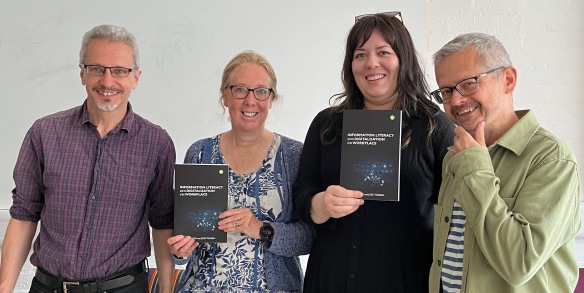
Information literacy competencies for career transitions in the digital age: book chapter now published

Pete Robertson, Hazel Hall, Marina Milosheva, Peter Cruickshank

L to R: chapter co-authors Pete Robertson, Hazel Hall, Marina Milosheva, and Peter Cruickshank

Information literacy and the digitalisation of the workplace has recently been published by Facet. I picked up my copy of the book this morning when I was on campus for a meeting with my fellow co-authors of Chapter 6: Marina Milosheva, Pete Robertson, and Peter Cruickshank (pictured above). Continue reading →

Information literacy and the digitalization of the workplace: new book to be published on 13th April 2023

Along with my co-authors Marina Milosheva, Pete Robertson, and Peter Cruickshank, I am excited to see that the details of Information literacy and the digitalization of the workplace are now available in Facet’s publishing catalogue.

The anticipated publication of the book next month on 13th April comes just over two years since its first editor Gunilla Widén (Åbo Akademi University, Finland) initially approached me about the possibility of contributing to this new work. The conversation ultimately led to the preparation of a chapter that draws primarily on some of the research that PhD student Marina Milosheva has undertaken for her ESRC/Skills Development Scotland funded doctoral study on career information literacy and career decision-making, and team discussions in Marina’s supervision meetings. In it we focus on the importance of employability information literacy and career information literacy to sustainable employment in largely digitised work environments. Continue reading →

From Brazil to Finland in 19 hours

Over the past couple of days I have achieved something that I would never have agreed to attempt in ‘normal’ times: I attended two PhD examinations on two different continents, 19 hours apart*. Continue reading →

‘Workplace information literacy: measures and methodological challenges’ – now published

Journal of Information Literacy logoWorkplace information literacy: measures and methodological challenges is a new paper published this week in the latest issue of the Journal of Information Literacy. Centre for Social Informatics colleagues Peter Cruickshank and Bruce Ryan are members of the team of authors who co-wrote the paper under the leadership of Professor Gunilla Widén of Åbo Akademi University. Continue reading →

Centre for Social Informatics staff contribute to new paper on the study of workplace information literacy

Peter Cruickshank Bruce Ryan

Peter Cruickshank and Dr Bruce Ryan

My Centre for Social Informatics colleagues Dr Bruce Ryan and Peter Cruickshank have recently contributed to new paper on methods for studying workplace information literacy. The manuscript is now available as a pdf download from the Edinburgh Napier repository.

Entitled ‘Workplace information literacy: measures and methodological challenges’, the work on the paper was led by Professor Gunilla Widén of the Faculty of Social Sciences, Business and Economics, Information Studies at Åbo Akademi University. The other co-authors are Gunilla’s former colleague Dr Farhan Ahmad (now at the University of Turku) and Dr Shahrokh Nikou, who works alongside Gunilla at Åbo. Continue reading →

Congratulations Lyndsey Jenkins: awarded a John Campbell Trust travel bursary

Lyndsey Jenkins

Lyndsey Jenkins

Many congratulations to Centre for Social Informatics PhD student Lyndsey Jenkins on the award of a John Campbell Trust travel bursary.

Lyndsey will use the bursary later this year to support a visit to Turku, Finland, where she will gather case study data for her ESRC-funded doctoral study on workplace learning and innovative work behaviours. Professor Gunilla Widén, and other members of the Information Studies group at Åbo Akademi University, will host Lyndsey’s visit. Lyndsey also intends to deliver a seminar presentation on her study while she is with Gunilla’s team.

The John Campbell Trust was established as an independent charitable trust through the bequest of the late Dr John Campbell. Campbell was an early member of the Institute of Information Scientists. The trust is administered by a body of Trustees under the chairmanship of Professor Adrienne Muir (Robert Gordon University). The purpose of the Trust is to further the education and development of information professionals through grants, scholarships, research or travel awards, to enhance the knowledge and experience of the information community as a whole.

Two new appointments: Fellow of the Royal Society of Edinburgh and Docent at Åbo Akademi University

The Royal Society of Edinburgh (RSE) brings together distinguished individuals from the arts, business, science and technology and academia worlds to advance learning and knowledge in Scottish public life. The breadth of the Fellowship – which includes over 1600 individuals from the UK and abroad – enables the RSE to provide a wide range of leadership and expertise.

Each year the RSE undertakes a rigorous five-stage nomination and election process to appoint around 60 new Fellows. I was delighted to learn last week that I am one of those elected in 2017. Also elected in 2017 are Val McDermid, James Naughtie, Professor Iain Stewart and Kirsty Wark. HRH The Duke of Cambridge also joins the cohort as a Royal Honorary Fellow. Continue reading →

Poster presentation in Copenhagen: Mapping the UK Information Workforce at #asist2016

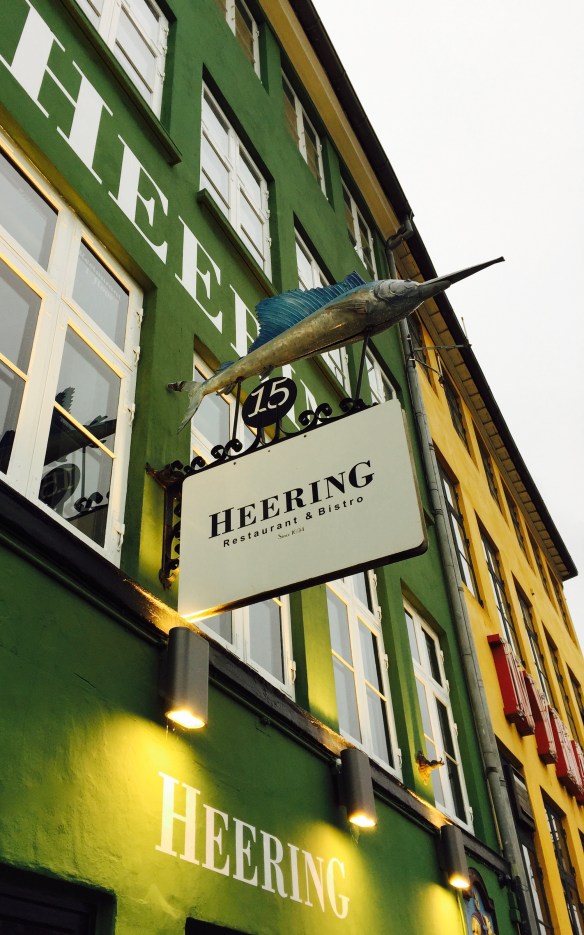
Heering Copenhagen

Some colour under a cold grey sky in Copenhagen

I’ve been in Copenhagen since the end of last week, participating at the 79th Annual Meeting of the Association for Information Science and Technology. I’ve been enjoying the presentations – from Greg Welch‘s keynote on telepresence to Debbie Rabina‘s account of research of prisoners’ information needs examined through discourse analysis – and catching up with colleagues from around the world.

There’s some really interesting work being conducted in Information Science across the globe, and I’ve learnt about some tempting job opportunities too. For example, if you’re functionally bilingual in English and French, and looking for a tenure-track position in North America, the University of Ottawa’s School of Information Studies – l’École des sciences de l’information (ÉSIS) – is hoping to recruit an Associate Professor who can make contributions to teaching and research in  library and information management. Do contact Mary Cavanagh (mary.cavanagh@uottawa.ca,@mfcavanagh) if this is of interest to you. I’ve also managed to play tourist a little with a short visit the city (in the cold and grey) on Sunday morning with my Finnish colleague Gunilla Widen. Continue reading →