Defining the UK information worker: the CILIP/ARA Workforce Mapping Project #lib_research17

Senator William McMaster, founder of McMaster University

William McMaster

Yesterday I delivered a presentation about social media research undertaken by staff and students within the Centre for Social Informatics at Edinburgh Napier University (slides available on SildeShare) at McMaster University.

Today I am returning to campus to contribute to the McMaster Library Research Symposium 2017.

At this event I will be relating the main findings of the CILIP/ARA Workforce Mapping Project completed in 2014/15, and the impact of the work to date. The slides for my presentation are available on SlideShare, and below. Continue reading
Social media for academic profile: a presentation to HATII at the University of Glasgow

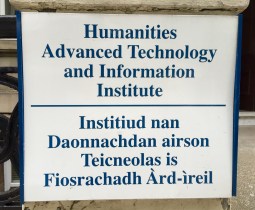
HATII signLast Tuesday I was a guest of colleagues at the Humanities Advanced Technology and Information Institute (HATII) at the University of Glasgow. They invited me over to give a presentation on social media for academic profile building along the lines of previous talks that I have given on the subject. It was Dr Ian Anderson who suggested me as a speaker having attended a training session on this theme that I ran at iDocQ in 2014. Continue reading

Strategies for building and assessing the long-term impact of research projects: closing plenary at #QQML2016

Today I am at Senate House in London as an invited speaker at the 8th International Conference on Qualitative and Quantitative Methods in Libraries. The conference has a packed programme of over 150 contributions. It started on Tuesday morning and ends with my presentation. Entitled What happens next? Strategies for building and assessing the long-term impact of research projects, the presentation covers four main themes: Continue reading

Research impact from LISResearch.org to LISResearch.org.au #LISRAproject

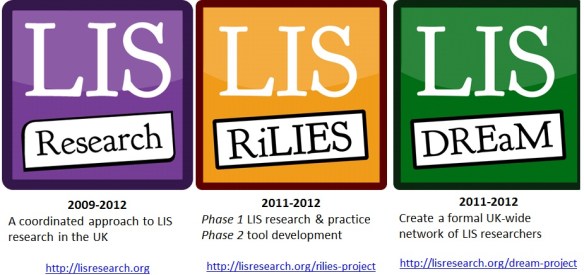
LIS Research Coalition DREaM RiLIES logosBetween 2009 and 2012 I led the implementation of the UK’s Library and Information Science Research Coalition. The broad mission of the Coalition was to facilitate a coordinated and strategic approach to Library and Information Science (LIS) research across the UK, strengthening links between LIS researchers and LIS practitioners, and between research and practice. This was achieved through the activities of the Coalition as a whole, and its ‘daughter’ projects: Developing Research Excellence and Methods (DREaM), and the two-part Research in Librarianship Impact Evaluation Study. Continue reading

Invited keynote presentation at #QQML 2016

QQML logoI have recently accepted an invitation to give the closing keynote paper at the 8th International Conference on Qualitative and Quantitative Methods in Libraries (QQML 2016) on Friday 27th May at Senate House, London.

The main theme of my presentation, entitled What happens next? Strategies for building and assessing the long-term impact of research projects, will be the impact of research and its measurement. Continue reading

Connected nation: thriving in a digital world – conference preview #ConnectedNationUK

British Library

The venue is the British Library Conference Centre

I’m very much looking forward to travelling down to London next Tuesday 8th December to attend a one day conference entitled Connected nation: thriving in a digital world.

This event will bring together influential policymakers, businesses, and third sector leaders to discuss the key issues that affect the future of the UK digital economy. Continue reading

University of Toronto iSchool/Knowledge Media Design Institute Colloquia Series presentation

iSchool Toronto logoThis afternoon I will be delivering a presentation as part of the colloquia series of the iSchool and Knowledge Media Design Institute (KMDI) at the University of Toronto. Continue reading

Library Research Symposium, McMaster University, Hamilton, Canada

McMaster University logoToday I’m presenting a research paper entitled ‘Creating a UK-wide network of LIS researchers’ at the library research symposium hosted by McMaster University in Canada. My invitation to speak at this event provides the first opportunity to present the initial findings from the DREaM Again project, which was completed in summer 2015. Continue reading

A week in Aberdeen at iDocQ and i3 2015 #iDocQ2015 #i3rgu

Seven weeks of dissemination

When Leo Appleton presents the slides for our joint-authored paper on the value and impact of public library services on citizenship development at the 11th Northumbria International Conference on Performance Measurement in Libraries and Information Services today, this will mark the end of a busy conference season for the staff and research students in the Centre for Social Informatics. Continue reading

The future of library and information science education and research: a view from Barcelona #liser2015

Third Seminar on LIS Education and Research logo

I spent Thursday 4th and Friday 5th June 2015 in Spain as a guest of the Faculty of Library and Information Science at the University of Barcelona. Here I was one of many academics from across the world invited to join the Faculty in the celebrations of its one hundredth anniversary. These were organised around an event billed as the Third International Seminar on Library and Information Science (LIS) Education and Research (LIS-ER).

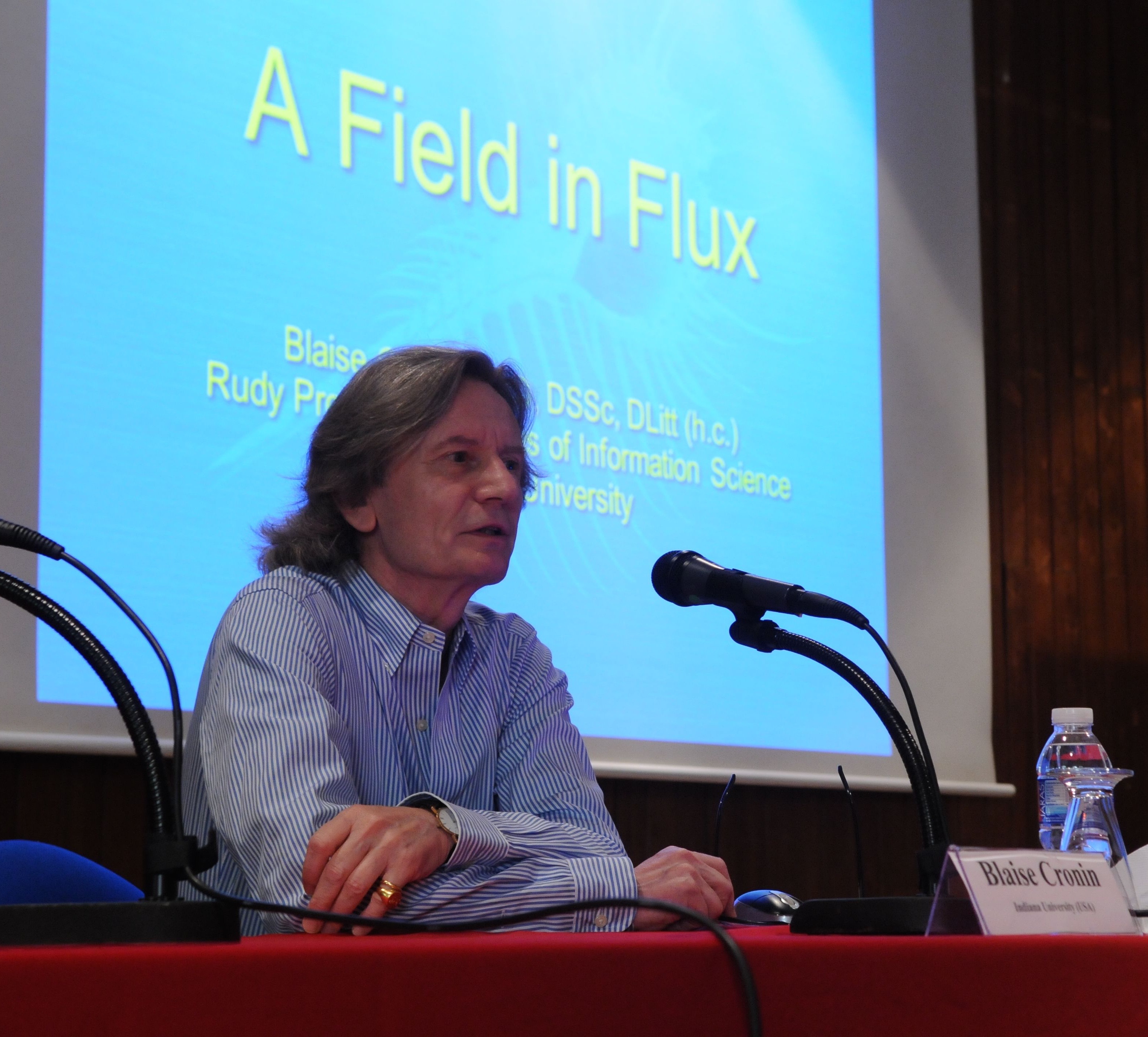
Blaise Cronin keynote speaker

Blaise Cronin keynote speaker

The main theme of the meeting was education and research in library and information science. The opening keynote presentation was delivered by Dr Blaise Cronin, Emeritus Professor at Indiana University, and Visiting Professor at the Centre for Social Informatics at Edinburgh Napier University. There then followed a series of sessions on: LIS education in Europe; LIS education in America; LIS research in general; LIS academic journals; and research data. There was also an opportunity for those who contributed to a poster display to introduce their work in plenary. In this session the speakers invited delegates to visit an exhibition that displayed work on themes that ranged from open science to beach libraries for summer tourists.
Continue reading